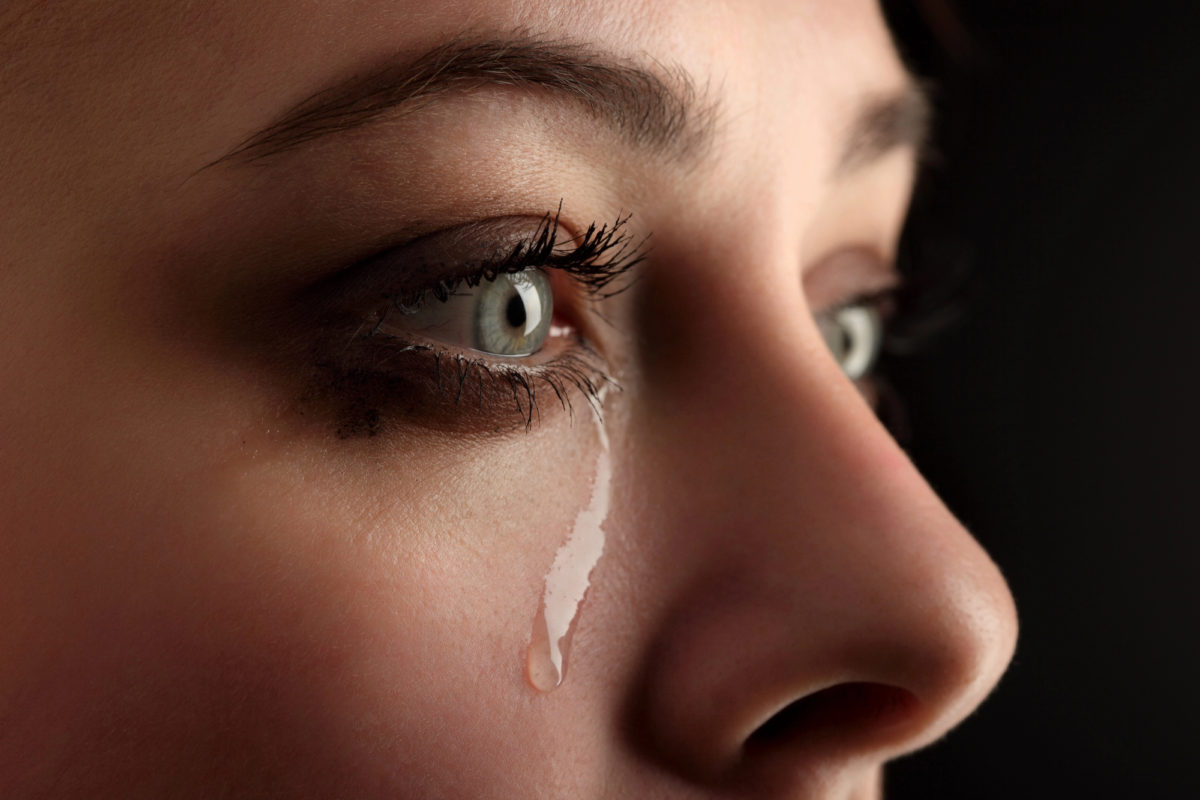
In the fields of clinical psychology and narrative storytelling, there is a significant disconnect between the “curated” version of a well-lived life and the gritty, complex reality of the human experience. Society often treats suffering like a software bug—an error code that needs to be patched, hidden, or deleted as quickly as possible. We are told to “good vibes only” our way through grief and “hustle” our way out of despair.
But the clinical truth is clear: Suffering isn’t a detour from life. It is the terrain.
The cultural narrative suggests that suffering is a sign of failure or a lack of mental fortitude. We view it as a void, a period of wasted time where life is “on hold” until the pain subsides. However, the true reality of suffering is that it is a profound biological and psychological catalyst. It is the kiln in which the porcelain of the soul is fired. Without the heat, the vessel remains fragile.
When we stop trying to outrun our pain and start sitting with it, we discover a phenomenon known as Post-Traumatic Growth (PTG). This isn’t just a “silver lining” platitude; it is a measurable psychological shift where individuals experience positive psychological change as a result of struggling with highly challenging life circumstances.
Here is how to stop viewing suffering as a prison and start using it as a workshop for resilience.
1. Radical Acceptance: The End of the “Second Arrow.”
In Buddhist psychology, there is a concept called the “Two Arrows.” The first arrow is the actual event—the breakup, the loss, the illness. It hurts. But the second arrow is the one we shoot into ourselves: the “Why me?”, the “This shouldn’t be happening,” and the “I’m a failure for feeling this way.”
Society teaches us to obsess over the second arrow. Research published in the journal Behaviour Research and Therapy suggests that emotional suppression and the struggle against one’s own feelings actually increase the frequency and intensity of those negative emotions.
The Resilience Shift: Practice radical acceptance. By acknowledging the reality of suffering without judgment, you stop wasting precious metabolic energy on a fight you cannot win. Acceptance isn’t liking the situation; it’s simply admitting the situation exists so you can finally put down your shield and pick up your tools.
2. Cognitive Reframing: Finding the “Functional” Narrative
Humans are the stories they tell themselves. If the story is “I am broken,” the biology follows suit. However, if the story is “I am being forged,” neurochemistry begins to shift.
Scientific research into Explanatory Style, pioneered by Dr. Martin Seligman, shows that people who view setbacks as temporary, specific, and external (rather than permanent, pervasive, and personal) are significantly more resilient.
The Resilience Shift: Look for the “functional” benefit of the struggle. Ask: What is this pain making me sensitive to that I was blind to before? Often, suffering strips away the superficial, leaving a crystal-clear view of core values. This clarity is a gift that comfort rarely provides.
3. Lean into the “Stress-Related Growth” Biological Response
The stress response (Cortisol and Adrenaline) is often viewed as purely negative. But there is another hormone released during stress: Oxytocin, often called the “social bonding” hormone.
Research by health psychologist Kelly McGonigal highlights that when we view the stress response as a tool to help us connect with others, the body releases oxytocin, which helps heart cells regenerate and repair from stress-induced damage. Suffering is biologically designed to drive us toward our “tribe.”
The Resilience Shift: Use suffering as a bridge, not a wall. Reach out. Vulnerability is a high form of courage and a fast route to biological recovery. By sharing a struggle, you transform a private agony into a collective strength.
4. Integration via Narrative Expressive Writing
Suffering often feels chaotic, like a storm of disconnected shards. To turn suffering into resilience, the chaos must be organized.
Dr. James Pennebaker’s extensive research on Expressive Writing has shown that spending just 15-20 minutes a day writing about deeply stressful experiences can lead to improved immune system function and significant drops in psychological distress. The act of turning feelings into words forces the brain to move “data” from the emotional centers (the amygdala) to the rational centers (the prefrontal cortex).
The Resilience Shift: Don’t just “think” about the pain; write it down. Create a beginning, a middle, and a hopeful end. This moves the individual from being a victim of the story to being the author of the memoir.
5. Cultivating “Tragic Optimism”
Coined by Viktor Frankl, a psychiatrist and Holocaust survivor, Tragic Optimism is the ability to remain optimistic despite the “tragic triad” of human existence: pain, guilt, and death. Unlike “toxic positivity,” which denies pain, tragic optimism says, “This is devastating, AND I can find meaning within it.”
A study in the Journal of Happiness Studies suggests that individuals who prioritize “meaning” over “happiness” show higher levels of long-term resilience and life satisfaction. Happiness is fleeting; meaning is an anchor.
The Resilience Shift: Identify one small way to use the experience to help someone else going through the same thing. This “altruism born of suffering” is the final stage of resilience. When pain becomes a lighthouse for someone else, it ceases to be a burden and becomes a mission.
The Reality of the Forge
Society wants you to believe that a resilient person is someone who never breaks. The opposite is true: A resilient person is someone who has been shattered and has chosen to put the pieces back together in a new, more intricate pattern.
In Japan, there is an art form called Kintsugi, where broken pottery is repaired with gold. The philosophy is that the piece is more beautiful for having been broken. Suffering is the gold. It is the evidence of survival and the map of depth.
Do not rush the healing. Do not apologize for the scars. The world is often broken, but it is also being remade every day by those who decide that their pain is not an end, but a beginning.